


Artificial tears are usually the first thing people reach for when their eyes feel dry, and they can bring relief for a few minutes. Then the burning and grittiness come back, often by mid-afternoon. If you’ve gone through 3 or 4 bottles this year and landed in the same place each time, the bottle probably isn’t the issue.
Your drops may not be working because they don’t match your type of dryness, or because the underlying cause hasn’t been treated.
Not every drop does the same job. Some add water to the surface of your eye, and others replace the oil that keeps your tears from evaporating. Choose the wrong one and you’re topping up something your eyes already have plenty of, which is why treating the cause can change how your eyes feel by the end of a long day.
Common Causes Behind Persistent Dry Eyes
Dry eye usually comes down to 2 things. Either your eyes don’t make enough tears, or the tears you make disappear too quickly.
Low Tear Production
Tear production slows for many people with age, and hormone changes can affect it as well. Certain medications lower tear output, including antihistamines and some blood pressure prescriptions. Mention everything you’re taking at your next visit, including over-the-counter medications.
Screens play a part. Your blink rate drops when you’re concentrating on a phone or a monitor, and every missed blink leaves the surface of your eye exposed a little longer. Stretch that across 8 hours on a screen and the effect adds up.
Fast Tear Evaporation
Tiny oil glands line the edge of your eyelids and coat every tear with a thin layer that slows evaporation. Blocked glands, a condition called meibomian gland dysfunction, leave your tears without that layer, so they can disappear within seconds of a blink.
Look at your surroundings as well. Wind pulls moisture off the surface of your eye. Winter heating dries indoor air until it does much the same thing, and smoke or a vent blowing toward your face adds to it.
Conditions Often Mistaken for Dry Eye
Gritty, red eyes don’t always mean dry eye. A handful of other issues create the same sensation, and treating the wrong one keeps you uncomfortable for longer than you need to be.
Allergies can leave your eyes itchy and watery in a way that reads as dryness. Inflamed eyelids can do it too, along with the tiny mites that sometimes live along the lash line. Because the signs overlap so much, bring a few specifics to your optometrist:
- Redness that stays with you all day
- Crusting or flaking along your lash line
- Itching that gets worse in certain seasons
- A gritty feeling that drops don’t calm
- Blurry vision that clears when you blink
How We Find the Cause of Your Dry Eye
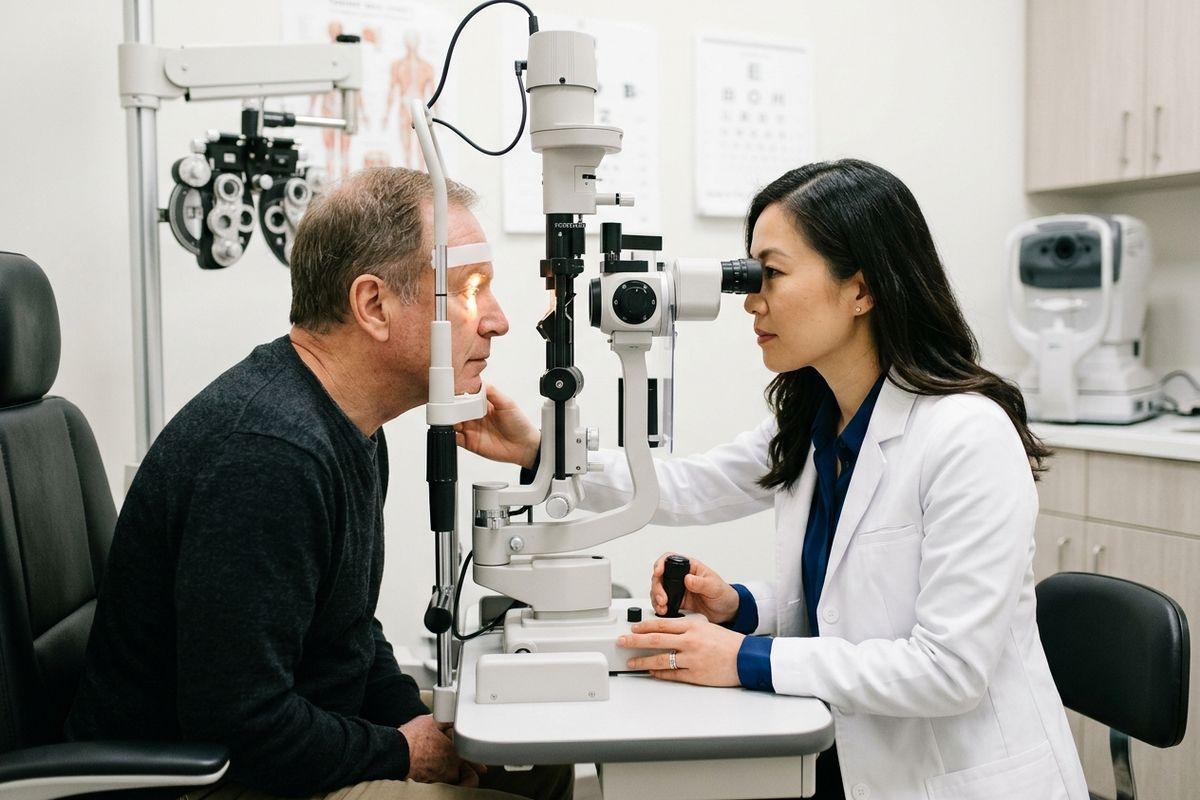
Guessing keeps the discomfort going. We measure the quality and the volume of your tears, which tells us whether you’re producing enough and whether what you produce holds up between blinks.
Diagnostic imaging lets us see your oil glands and check for inflammation along the lid margin. That’s how we target the cause instead of the symptoms.
Your visit starts with a conversation about your symptoms and your day, from hours on a screen to contact lens wear to how your eyes feel first thing in the morning. After the eye health check, we’ll explain what we found in plain language and walk you through a plan built around your routine. You’ll leave knowing your next step.
Dry Eye Therapy Options
Once we know the cause, we can match treatment to it. There’s rarely a single fix, so a plan often combines a few of these:
- Intense pulsed light therapy, which uses targeted light to calm inflammation in your eyelids and can improve how your oil glands work
- Radiofrequency treatment, which warms the lids to loosen thickened oil so it can move again
- Meibomian gland expression, where gentle pressure along the lid margin clears blockages by hand
- ZEST, an in-office lid cleaning with plant-based extracts that can clear Demodex mites from the lash line
- Eyelid debridement and medicated lid scrubs for inflammation that keeps coming back
At-home care supports all of it. Medicated drops can increase tear production, omega-3 supplements can improve the oil your glands produce, and warm eyelid masks or sprays can soften blockages between visits. If you wear contacts, the lenses you choose may matter as well.
Find Out What’s Behind Your Dry Eye
If drops stop helping, take it seriously, and a proper look at the surface of your eye can tell you what’s driving the dryness. At View Eye Care, we can find the source of your discomfort and build a dry eye therapy plan around the way you actually spend your day. Book your comprehensive eye exam and get answers that bring relief!