

Key Takeaways
- Knowing your face shape can help you narrow down frame styles that complement your features.
- A mirror or quick photo can help you identify your face shape by comparing your facial proportions.
- Each of the six common face shapes tends to pair well with specific frame styles for a balanced look.
- Comfort and proper fit are just as important as style for clear vision and all-day wear.
- Use face shape as a guide, but choose frames that reflect your personal style and make you feel confident.
- An in-person frame fitting can help you find eyewear that suits your face, prescription, and lifestyle.
Your glasses sit right in the middle of your face, so the pair you choose changes how you look every single day. Staring down rows of options can feel overwhelming, but a bit of guidance makes the process much easier.
The right frames come down to matching your face shape with contrasting lines, then letting comfort and personal style guide your final choice. A mirror, a few measurements, and a hands-on look at some frames will get you most of the way there.
How to Find Your Face Shape
Before you fall for a pair of frames, figure out the shape you’re working with. Grab a mirror, or snap a selfie in good light with your hair pulled back.
Look at where your face is widest and where it narrows. Is your forehead broader than your jaw? Do your cheekbones stand out? These small details tell you a lot.
For a more precise read, measure 4 spots:
- The width of your forehead
- The distance across your cheekbones
- The width of your jaw
- The length from your hairline to your chin
Those 4 numbers point you toward 1 of the 6 shapes below.
The 6 Common Face Shapes
Once you know your shape, picking frames gets a lot simpler. Here’s how to spot each one and which styles tend to work well.
Round
A round face has soft lines, with width and length that measure close to equal. Your cheeks are likely the fullest point.
Look for rectangle, square, and geometric frames. The angles add definition and can make your face appear a touch longer. Keep the frame width close to your actual face width. A frame that’s too narrow will only emphasize the roundness, while a slightly angular shape in the right size creates a nice sense of length and structure.
Oval
An oval face runs slightly longer than it is wide, with a gentle narrowing at the forehead and chin.
You’ve got room to play here. Most frame shapes flatter an oval face, so lean into whatever style catches your eye. If you want a direction to start with, try frames with a strong bottom edge, like a browline or a geometric shape. They add a bit of visual interest without fighting your natural proportions.
Heart
A heart-shaped face has a wider forehead that tapers down to a narrow, pointed chin.
Try oval frames, aviators, or semi-rimless styles. They draw the eye downward and soften a broader forehead. Steer clear of heavy, decorative top bars. Anything that adds bulk above your eyebrows will only widen your forehead further and throw off the balance you’re going for.
Diamond
A diamond face features wide cheekbones with a narrower forehead and jaw, a striking combination that pairs well with the right frames.
Browline frames, round shapes, and semi-rimless styles highlight your eyes and cheekbones nicely. Skip narrow, boxy frames. They tend to sit right at your widest point and can make your cheekbones look even more pronounced than they already are.
Square
A square face has a strong, angular jaw, with the forehead, cheeks, and jaw measuring close to the same width.
Round, oval, wire, and semi-rimless frames soften those strong angles. If you’d rather lean into your jawline than soften it, try a frame with slightly rounded edges instead of a fully round shape. You’ll get a bit of contrast without losing the definition altogether.
Triangle
A triangle face flips the square on its head. Your jaw sits broad and wide while your forehead stays narrower up top.
Rectangle frames, browline styles, and cat-eye designs add width where you want it, right at the top. Steer away from bottom-heavy frames or styles with heavy detailing near the lower rim. They’ll only add more width to a part of your face that’s already your widest point.
Fit and Personal Style Matter Just as Much
Face shape gives you a helpful starting point, but treat it as a guide, not a rulebook. Plenty of people love a style that “shouldn’t” work for them, and that’s honestly the fun part.
Fit matters most of all. Frames that sit level and rest comfortably on your nose keep your lenses lined up with your eyes. A pair that pinches or slides will leave you fiddling instead of seeing clearly.
Then there’s colour and character. Pick frames that reflect how you want to show up, whether that’s a bold tortoiseshell or a quiet wire rim. Your glasses sit front and centre on your face, so choose a pair that feels like you.
Ready to Find Your Pair?
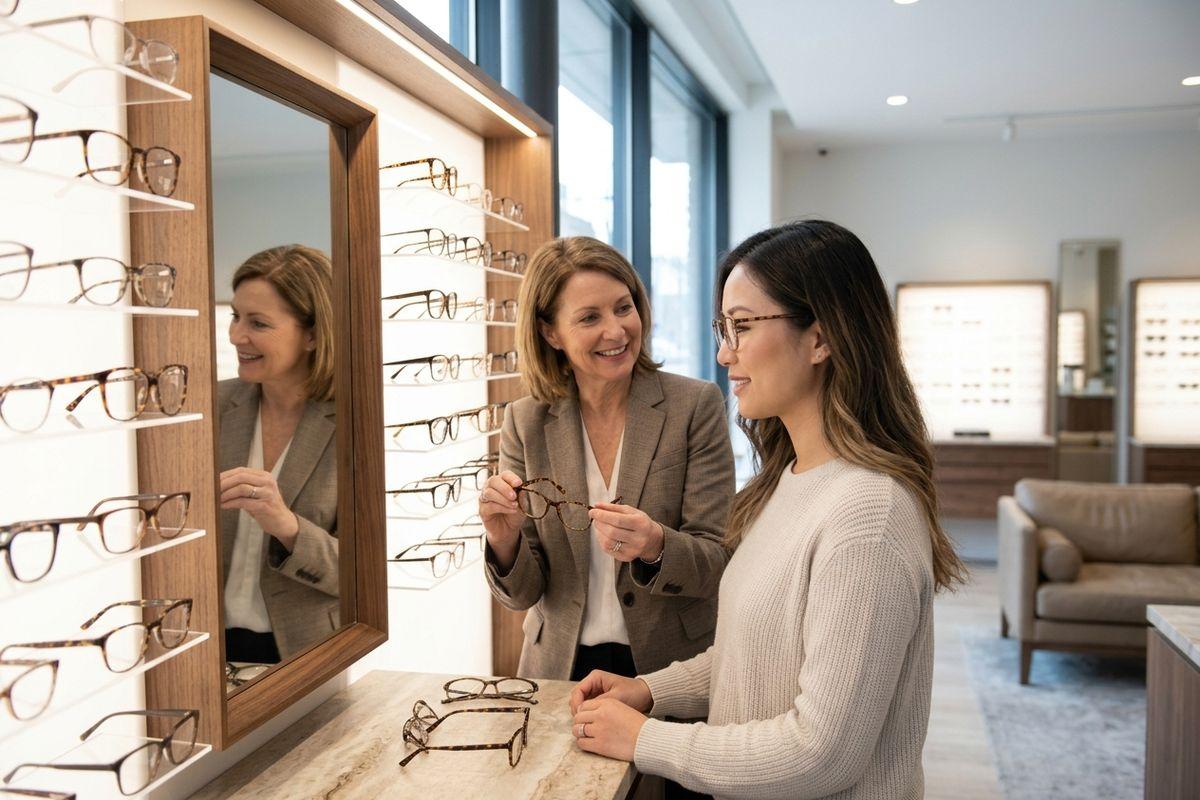
Picking frames online can leave you guessing. Try them on in person instead, and see how each pair actually feels and moves with your face.
Browse independent and designer eyewear collections at the View Eye Care gallery, where you can compare shapes, colours, and fits side by side. Check how a frame reads in daylight, and how it settles when you smile.
Our team will walk you through options that match your prescription, your face shape, and your day-to-day life. Book a visit and find a pair that fits your vision and your style.