Key Takeaways
- Presbyopia, a gradual hardening of your eye’s lens, makes close-up focus harder and usually becomes noticeable in your early-to-mid 40s.
- The change can feel sudden, but it builds slowly over several years.
- A comprehensive eye exam rules out other causes and measures your exact focusing ability.
- Glasses, progressive lenses, and contact lenses are all options depending on your lifestyle.
- Your prescription may change every 2 to 3 years through your 40s and 50s, then tend to settle.
Many adults notice that fine print on menus and medication labels gets harder to read sometime in their 40s. The change can seem to arrive overnight, which leaves a lot of people wondering if something’s wrong with their eyes.
In most cases, the cause is presbyopia, a natural change in your eye’s lens that makes it harder to focus up close as you age.
Book a comprehensive eye exam to confirm what’s behind the change, then explore frames and lenses that suit the way you read and work.
What’s Actually Happening to Your Eyes
Your eye has a flexible lens that adjusts shape to bring objects into focus at different distances. With age, that lens loses its elasticity, so it can’t adjust as easily for close-up tasks.
Most people first notice this somewhere in their early-to-mid 40s. The change doesn’t happen overnight, but there’s often a point where it suddenly feels like it did.
Presbyopia happens to nearly everyone eventually, including people who’ve never needed glasses. It’s separate from nearsightedness and farsightedness, though you can have either condition and still develop presbyopia on top of it.
Signs You Might Need Reading Glasses
Some signs are obvious. Others are easy to dismiss until they start adding up. Watch for a few of these:
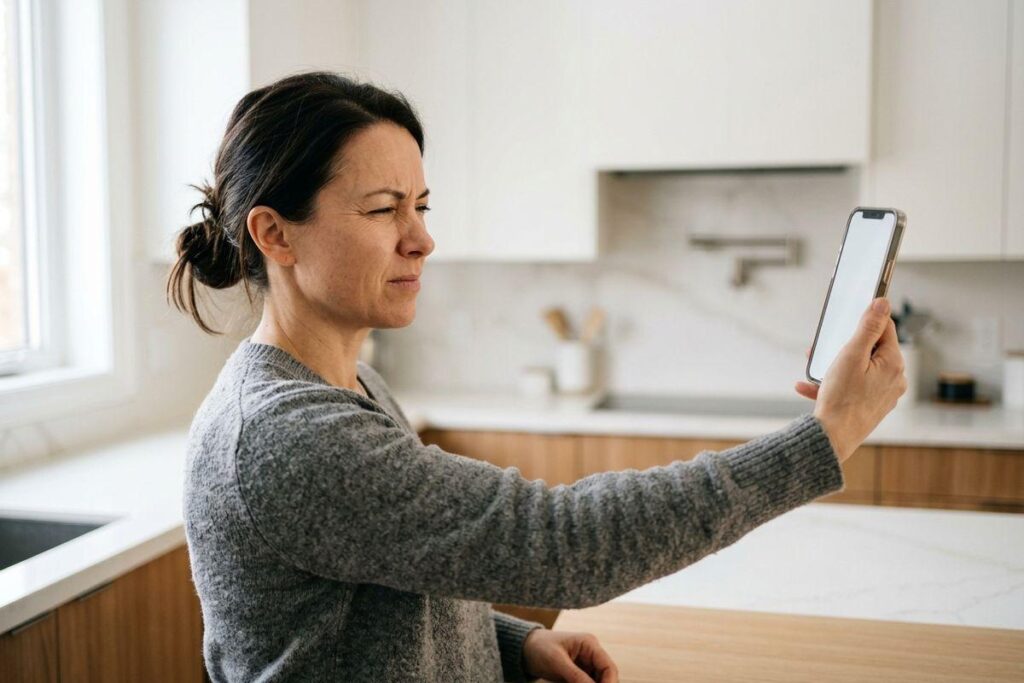
- You hold your phone or a book at arm’s length to read it clearly.
- Blurriness at your usual reading distance
- Trouble reading in dim light
- Tired eyes during close work
- Headaches after reading or detailed tasks
If 2 or more of these sound familiar, your close-up vision has likely changed enough to be worth checking out. Eye fatigue from screens can also overlap with digital eye strain, so it’s worth sorting out which factor is driving your discomfort.
What a Comprehensive Eye Exam Tells You
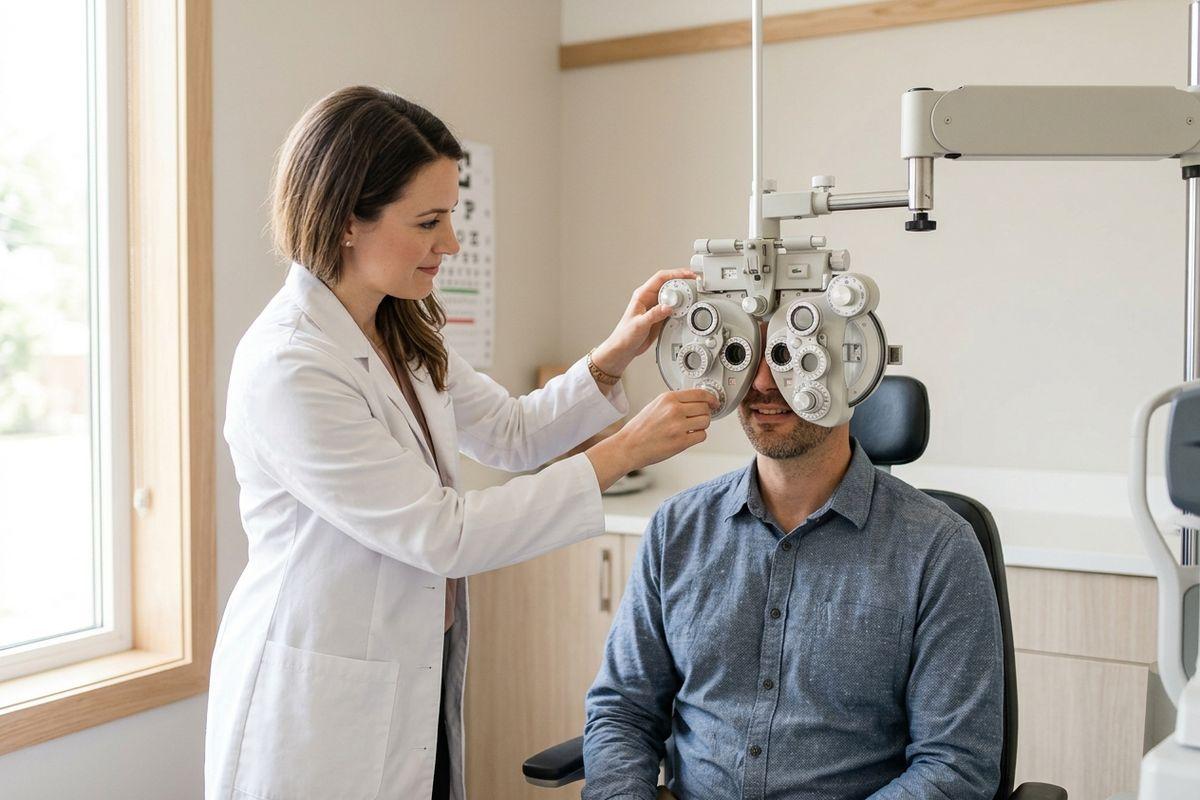
A comprehensive eye exam can confirm whether you need reading glasses, but it also does much more than that. your optometrist measures your exact focusing ability and rules out other factors, like dry eye or astigmatism, that can produce similar symptoms.
Your eyes can also show signs of conditions that affect your whole body, including diabetes and high blood pressure. Your optometrist can look for these during the same visit and talk you through anything they find.
Symptoms That Need Prompt Attention
Most reading difficulties are gradual and benign. A few, however, call for an immediate visit, rather than waiting for your next appointment:
- Sudden or severe changes in your vision
- Flashes of light
- New floaters
- Loss of side vision
These symptoms can point to something unrelated to presbyopia and are worth having assessed right away.
Lens Options for Presbyopia
Several types of lenses can correct presbyopia. Your daily routine helps decide which one fits you.
Prescription Reading Glasses
Custom prescription readers are fitted to your exact measurements, which makes them more comfortable and accurate than off-the-shelf options. If your vision needs vary more across distances, progressive lenses transition smoothly between near, mid-range, and far, without a visible line in the lens.
For a screen-heavy workday, computer-specific lenses are designed around the distance between your eyes and a monitor. They can take real pressure off your eyes during long stretches at a desk.
Contact Lens Options
If you’d prefer to manage presbyopia without glasses, let’s chat about contact lenses. Multifocal contacts correct across distances in a single lens. Monovision fitting, where each eye is corrected for a different distance, is another approach some people adapt to well. A proper contact lens fitting helps determine which option suits your eyes and lifestyle.
How to Keep Your Eyes Comfortable While Reading
A few daily habits can make close work easier on your eyes. Follow the 20-20-20 rule during screen time: every 20 minutes, look at something 20 feet (about 6 metres) away for 20 seconds. This short break can give your focusing muscles a chance to relax.
Read under bright, direct light whenever you can. Increase the text size on your phone and computer, too, so you’re not straining to make out small fonts.
How Often Your Prescription May Change
Presbyopia keeps progressing for a while after you first notice it. Through your 40s and 50s, your prescription may change every 2 to 3 years as the lens continues to change. By your 60s, that process tends to settle, and your prescription often stays fairly consistent after that.
We’ve heard this before, but wearing reading glasses won’t make your eyes weaker or more dependent on them. Your lens follows its own timeline whether you wear glasses or not.
Ready to See Clearly Again
If small print has started to slow you down, an eye exam can help you find out what’s changed and which lenses fit your routine. At View Eye Care, our optometrists consider your overall health alongside your vision and explain your results in clear, simple terms.
Book your appointment online, and bring your current glasses along with a few notes on when close-up reading feels hardest. We’re ready to help you see clearly again.