

If you wear glasses, a sunny day usually leaves you with 2 options. You can squint through your clear lenses, or you can grab a pair of non-prescription sunglasses and put up with blurry vision until you’re back indoors.
Prescription sunglasses use the prescription from your latest eye exam in tinted lenses with UV protection. For most people who wear glasses and spend regular time outdoors, prescription sunglasses are worth it. They can make bright days more comfortable and help protect your eyes while you’re out.
What Are Prescription Sunglasses?
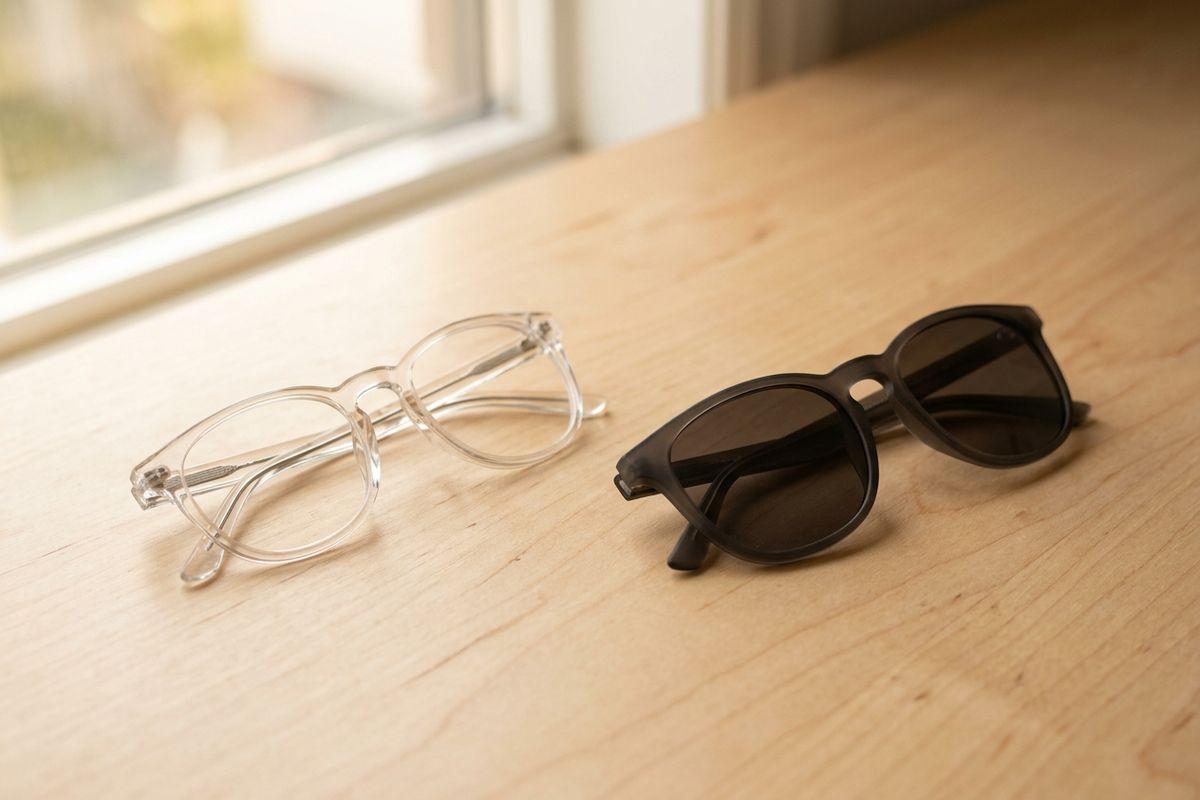
Prescription sunglasses are sunglass frames fitted with tinted lenses made to your exact prescription. You won’t need clip-ons or magnetic attachments, and they look like any other pair of sunglasses.
Most prescriptions work in sunglasses, including progressive lenses, which correct near and distance vision in a single lens. A more complex prescription doesn’t rule you out. Your optometrist can tell you which lenses and frames suit your current prescription.
How Prescription Sunglasses Protect Your Eyes From UV
Look for lenses that block 100% of UVA and UVB rays. Over the years, UV exposure can raise your risk of cataracts, which cloud the lens inside your eye, and age-related macular degeneration, which affects your central vision.
Don’t judge UV protection by how dark a lens looks. Price and tint won’t tell you how much UV a pair blocks, so check the label for “UV400” or “100% UV.” When your optometrist prescribes your lenses and an optician fits them, you know you have protection along with clear vision.
Wear them year-round, and keep them on in the car, since UVA rays can pass through glass, and UV is still around on cloudy days.
How Prescription Sunglasses Make Everyday Life Easier
You don’t have to juggle 2 pairs of glasses every time you head out the door. Keep your prescription sunglasses in your car or bag and swap them in when the light gets harsh.
Long afternoons of squinting can leave your eyes feeling tired. Tinted lenses that match your prescription can help you see comfortably whether you’re on the water or behind the wheel.
They also suit activities like cycling or skiing, where you need clear distance vision and protection from bright light.
Prescription Sunglasses vs. Transition Lenses
Transition lenses, also called photochromic lenses, darken when UV light hits them and clear up indoors. They’re handy if you move in and out of buildings all day.
Driving is where they struggle. Most windshields block nearly all UV light, so standard photochromic lenses often stay fairly light in the car. On a bright summer drive, you may still find yourself squinting.
Prescription sunglasses stay dark wherever you are, which can make them a better fit for long drives and full days in the sun. Some people like having both. They wear transition lenses as their everyday glasses and keep prescription sunglasses for driving and longer stretches outdoors.
Lens Options for Prescription Sunglasses
Your optician can walk you through the lenses and frames that suit your prescription and how you spend time outside. Here are a few lens options to ask about:
- Polarized lenses cut glare that bounces off water and snow, making driving and time near the water more comfortable.
- High-index lenses are thinner and lighter than standard lenses, so they’re worth considering if you have a stronger prescription.
- Gradient tints go from dark at the top to lighter at the bottom, which can make it easier to read your phone or dashboard.
- Back-side anti-reflective coatings can reduce the glare that bounces off the inside of your lenses when the sun is behind you.
How to Choose Frames for Prescription Sunglasses
Pick a frame that’s large enough to cover your eyes well. Wraparound and oversized styles can limit how much light slips in around the edges.
Fit matters just as much. A lens that sits too far from your eye or off-centre may not give you the clear vision your prescription is meant to provide.
Have an optician fit your sunglasses so the lenses line up with your pupils. Buying your eyewear from your optometrist also means you have someone to adjust your frames if they start to slip or loosen. And with independent and designer frames to choose from, you can find a pair that suits your style.
Are Prescription Sunglasses Worth the Cost?
Your lenses usually make the biggest difference to the price. Progressive, polarized lenses cost more than simple single-vision lenses, and your frame choice adds to the total. Consider how often you’ll wear them. If you drive a lot or spend your weekends outside, you’ll likely reach for them most days from spring through fall.
Check your extended health benefits before you buy. Some plans cover prescription eyewear, and that coverage may apply to prescription sunglasses.
Make sure your prescription is current, too. Lenses made with an outdated prescription won’t give you clear vision, no matter how much you spend on the frame.
Find Prescription Sunglasses That Suit Your Time Outside
A good pair of prescription sunglasses starts with an accurate prescription and lenses chosen for how you’ll use them. Our optometrists check your vision, and our opticians help you compare lens options and find a frame that fits your face and your style.
At View Eye Care, we’ll help you choose prescription sunglasses that work for your eyes and your routine. Book an appointment and tell us where you’ll wear them so we can help you find the right pair.