
Most frame shopping starts with shape and colour. Material comes up later, usually once you’ve already fallen for a pair, even though it decides how the glasses feel by late afternoon and how well they hold their fit after a year of daily wear.
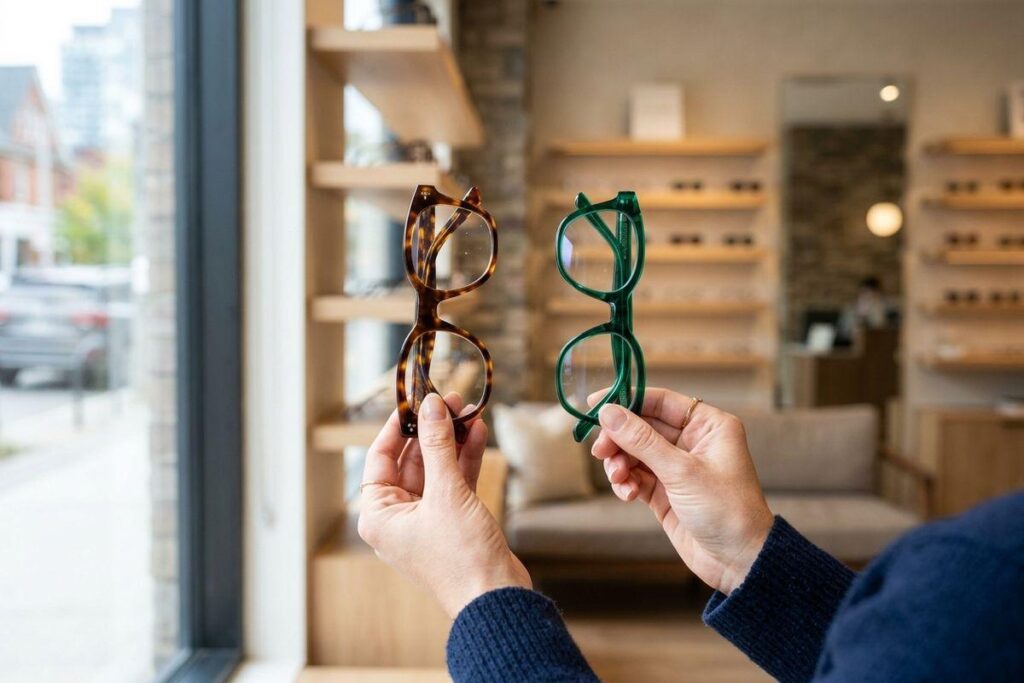
Spend a few minutes with the frames and lenses on display, and you’ll notice how differently two similar-looking pairs sit in your hands. Acetate, titanium, and metal each suit different budgets and routines, so the right pick depends on how you live, not which material sounds more impressive. Ask an optician for samples of all 3 before you order anything.
What the Material Actually Does for Your Face
Your glasses go on before breakfast and come off at bedtime. That’s a long time for something to press on your nose or slide down when you look at your phone.
Weight, feel, and fit all trace back to what your frames are made of. A heavy frame can leave marks on your nose by mid-afternoon, while a lighter one can feel like you’re wearing almost nothing.
Material also changes how a frame ages. A well-made pair can hold its shape through years of being pushed up the nose and tossed onto a desk, though softer materials may loosen sooner and need reshaping.
Acetate Frames for Colour, Style, and Comfort
Acetate is a plant-based plastic. Manufacturers treat cellulose from wood fibres and cotton with acetic acid until it forms a material that can be pressed into sheets, then cut and hand-polished. Skilled hands cut each frame from sheets of the material, which lets makers layer deep patterns and colours that plastic moulds can’t match.
Perks of Acetate
Choose acetate when a few things matter to you:
- Rich colour and pattern, from classic tortoiseshell to translucent pastels
- A material that sits comfortably against skin that reacts to metals
- Thicker profiles that carry bolder, more sculptural shapes
- Warmth against the face on a cold morning
Downsides to Keep in Mind
Acetate isn’t indestructible. Drop a pair on tile or sit on them, and the front may crack rather than bend.
Heat and daily handling can also loosen acetate over the months. A quick reshaping can restore the fit, which is why an occasional walk-in for an adjustment is worth the 10 minutes.
Lightweight Titanium Frames for Active Days
Titanium is strong yet light, so you can wear it for hours without feeling the weight on your nose. It resists rust and shrugs off the wear that comes with daily handling.
The metal also flexes under pressure instead of snapping. If you toss your glasses in a bag or your kids grab them off your face, titanium generally bends and springs back. Sweat and skin oils leave the metal alone, so the finish holds up through a slushy winter.

Things to Consider with Titanium
That durability comes at a price. Titanium frames often cost more than acetate or standard metal options. You’ll also find fewer bold colours, since titanium leans toward muted, understated finishes rather than bright patterns.
Metal Frames for a Classic Look and Easy Fit
Stainless steel and similar metals give you a sleek, understated look that works with almost any outfit. Many metal frames include adjustable nose pads, so the team can tweak the fit until the frames sit right for your nose.
Metal frames fit you well if you lean toward a minimalist, timeless style. A slim wire rim reads as understated in a boardroom and all but disappears in photographs.
Who Metal Frames Suit
For anyone with metal sensitivities, nickel-free picks let you enjoy the clean look without the skin irritation that some metals can bring.
Nickel remains a common cause of allergic contact dermatitis and shows up in many alloys. Ask for nickel-free or titanium-based options if jewellery has left your skin red or itchy before.
How to Pick the Right Frame for You
Think about how you spend your days. A few questions narrow the field quickly:
- How often do your glasses end up loose in a bag or on a car seat?
- Does your skin react to earrings, watches, or belt buckles?
- Do you want frames that make a statement?
- How long do you expect this pair to last?
- Are you wearing them for hours in front of a screen?
Frames read differently on the shelf than they do on your face. Trying them on helps you see how a shape works with your face and how the material feels through a full day.
An optometrist and optical team can measure and fit your eyewear properly, lining the optical centres up with your pupils and adjusting the temples so the lenses sit where your prescription needs them.
Bring your current pair along, too. A frame you’ve worn happily for years holds useful clues about width and bridge fit.
Ready to Try a Few Pairs On?
Come in with your prescription and an open mind about shapes you’ve never considered. View Eye Care stocks acetate, titanium, and metal frames from independent designers in our boutique, and the team will walk you through the differences while you compare pairs side by side.
Book an appointment and find frames that feel right from the first fitting.