

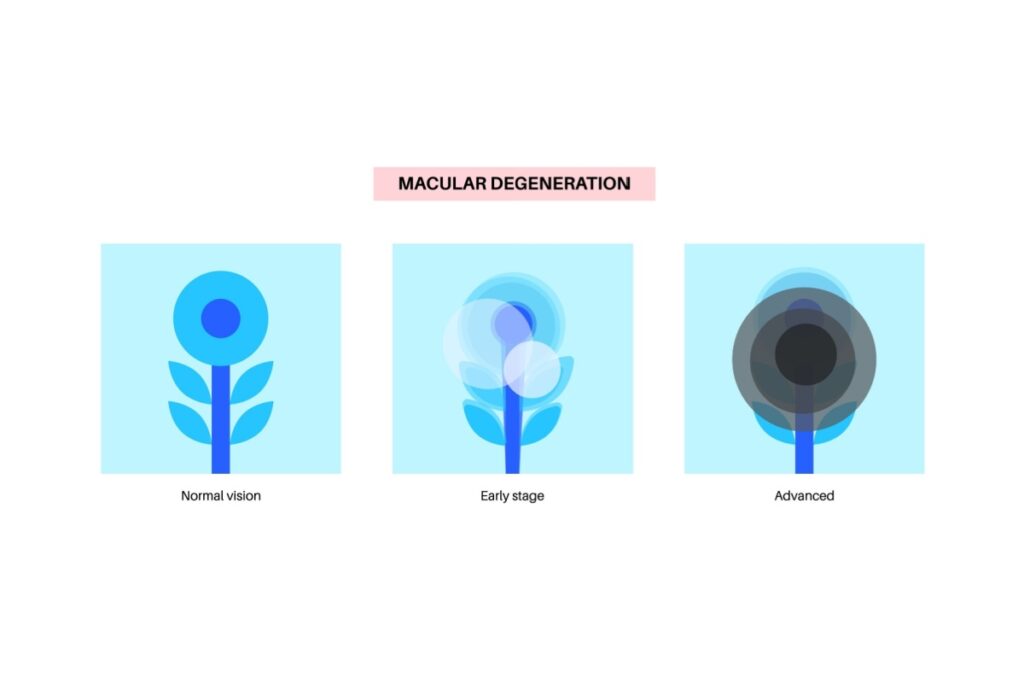
Macular degeneration often develops slowly, making the first signs easy to overlook. Many people assume small vision changes are just part of getting older, but these shifts can signal early damage to the macula, the part of the retina responsible for sharp, central vision.
The early warning signs of macular degeneration include straight lines appearing wavy, dim/greying or blurry central vision, difficulty reading fine print, and a greater need for bright light. These subtle changes may appear months or even years before major vision loss, making early awareness key to protecting long-term sight.
Recognize the Subtle Early Signs
Vision Distortions You Shouldn’t Ignore
Macular degeneration affects your central vision in ways that might seem minor at first. You may notice that straight lines appear wavy when you look at door frames or window blinds.
Your central vision can become blurry or fuzzy, making it harder to see fine details clearly. Dark spots or blind areas might develop in your central field of vision, and words may appear to have missing letters when you read.
- Straight lines appearing wavy or bent
- Blurry or fuzzy central vision
- Dark spots or blind areas in your central field of vision
- Words appearing to have missing letters when reading
Changes in Your Daily Vision Needs
As macular degeneration progresses, you may start to notice small adjustments in your everyday visual habits. Tasks that once felt effortless like reading, recognizing faces, or seeing clearly in low light can become increasingly challenging over time.
You might find yourself needing brighter light when reading or doing close work than you used to. Adapting to dim environments such as restaurants or theatres can also become more difficult. These gradual changes often happen so slowly that you adjust without realizing your vision has shifted.
- Need for brighter light when reading or doing close work
- Difficulty adapting to dim lighting in restaurants or theatres
- Trouble recognizing familiar faces
- Increased difficulty with fine details
How Our Toronto Eye Doctors Spot Early Macular Degeneration
Comprehensive Eye Exams Reveal Hidden Signs
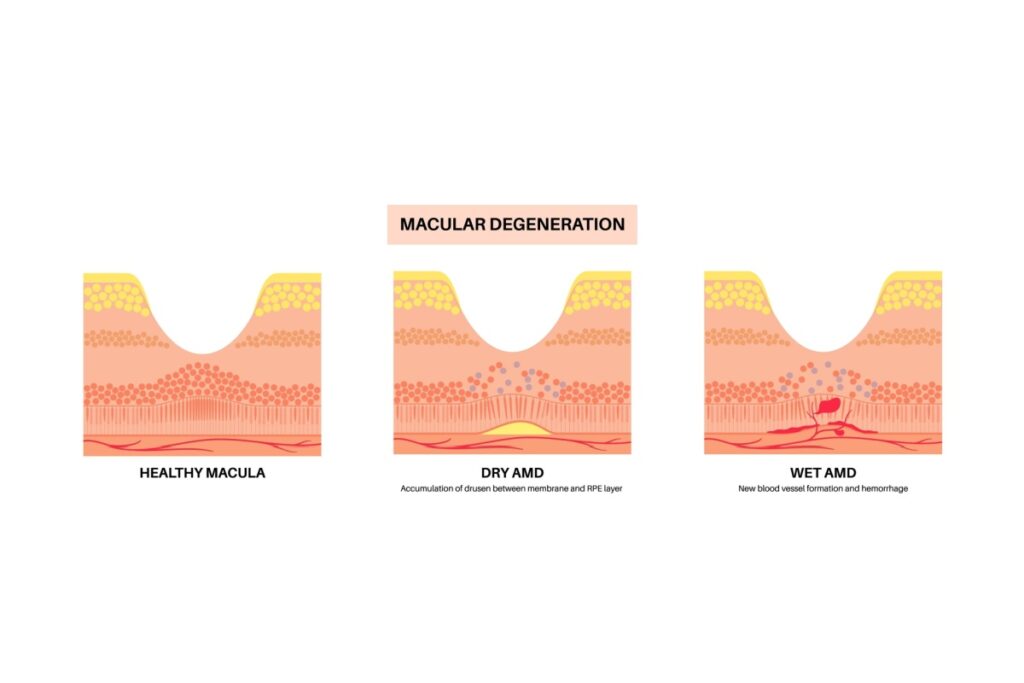
During comprehensive eye exams, your optometrist can detect drusen, tiny yellow deposits under your retina, before you notice any symptoms. These deposits often appear years before vision changes occur.
We examine your macula using specialized equipment that can reveal changes invisible to standard vision tests. Early detection through regular exams allows us to monitor progression and recommend timely interventions.
Advanced Diagnostic Tests for Early Detection
Advanced diagnostic imaging provides detailed views of your retinal layers, helping us spot changes before they affect your daily vision. OCT testing can reveal damage that hasn’t yet caused noticeable symptoms.
We use multiple testing methods to get a complete picture of your macular health. Each test provides different information about your retinal condition and helps us track changes over time.
- OCT scans to examine retinal layers
- Amsler grid test to check for vision distortions
- Dilated eye exams to view the macula clearly
- Visual acuity testing for central vision changes
Who’s at Risk for Macular Degeneration
Age & Family History Factors
Adults over 50 face higher risk for developing macular degeneration, with risk increasing significantly after age 60. Family history increases your chances of developing this condition.
Genetic factors play a role in development, so knowing your family’s eye health history helps us assess your risk level. We can recommend more frequent monitoring if you have multiple risk factors.
- Genetic factors & family history increases your chances – play a role
- Adults over 50 face higher risk
- Being fair, blond, & blue-eyed increases your risk
- Females are at a greater risk than males
Lifestyle Risk Factors You Can Control
UV exposure is a strongly implicated risk factor in the development and progression of the disease. Limiting the amount of UV light that the eyes are exposed to can help reduce this risk. These measures all contribute to reducing the risk, including:
- wearing high-quality, larger, UV-blocking sunglasses
- wearing large brimmed/peaked hats
- avoiding sun exposure during the 11-3 hours
Other implicated risk factors include:
- Smoking significantly increases risk – about a 2–4× higher risk Vs non-smokers
- High blood pressure affects eye health
- Obesity may worsen the condition
- Diet high in saturated fats
- Diabetes can have an impact on the progression of the disease
When to Schedule Emergency Eye Care
Sudden Vision Changes Require Immediate Attention
If you notice sudden central vision loss, new distortions, or dark spots, seek eye care right away. These changes can signal wet macular degeneration, a rapidly progressing form of the disease that can cause serious vision loss if left untreated.
Don’t wait to see if symptoms improve on their own. Early evaluation and treatment make a significant difference in protecting your sight.
Regular Check-ups for At-Risk Adults
Everyone should have a comprehensive eye exam at least once a year to monitor overall eye health and detect subtle changes early. More frequent visits may be recommended if you have diabetes, a family history of macular degeneration, or other eye diseases.
Regular exams allow for early detection, timely treatment, and a clearer understanding of how your vision may change over time.
Early Detection Preserves Your Sight
Why Timing Matters for Treatment
Catching macular degeneration early gives you the best chance to slow its progression and maintain clear, functional vision. Once significant damage to the macula occurs, treatment options become more limited, and vision loss may be harder to reverse.
Early diagnosis allows for interventions that help preserve the central vision needed for reading, driving, and recognizing faces, all essential for maintaining independence and quality of life for Toronto residents of all ages.
Treatment Options for Macular Degeneration in Toronto
Treatment varies depending on the type and stage of macular degeneration. Early or dry forms are often managed through nutritional support and lifestyle adjustments, while wet macular degeneration may require targeted medical treatments to control abnormal blood vessel growth.
In Toronto, patients have access to a range of diagnostic and management options designed to protect vision and slow disease progression, including:
- Nutritional supplements to support macular health
- Injections for managing wet macular degeneration
- Lifestyle modifications such as quitting smoking and improving diet
- Low vision rehabilitation to maximize remaining vision
Regular eye exams and personalized monitoring help ensure changes are caught early, giving you the best chance to preserve long-term sight.
Protecting Your Vision for the Future
Regular eye exams are the best way to detect macular degeneration early and preserve clear, central vision. Advanced diagnostic tools, such as OCT scans, can identify subtle retinal changes long before symptoms appear, allowing for timely treatment and monitoring.
Adults over 50 and anyone with risk factors, including family history, smoking, or diabetes, should schedule routine comprehensive eye exams. If it’s been more than a year since your last visit, book an eye exam with our Toronto optometrists to help protect your sight for the future.