

If you have astigmatism, you may have been told that glasses are your only option for clear vision. You might feel limited, especially if you lead an active lifestyle or simply prefer a look without frames. The idea of settling for glasses when you want the freedom of contacts can be frustrating.
Fortunately, that idea is a myth for most people. There are contact lenses that are specifically designed to correct astigmatism, giving you crisp, stable vision without the need for glasses. What matters most is finding lenses designed for astigmatism and working with an optometrist who can fit them properly.
What Is Astigmatism & How Does It Affect Vision?
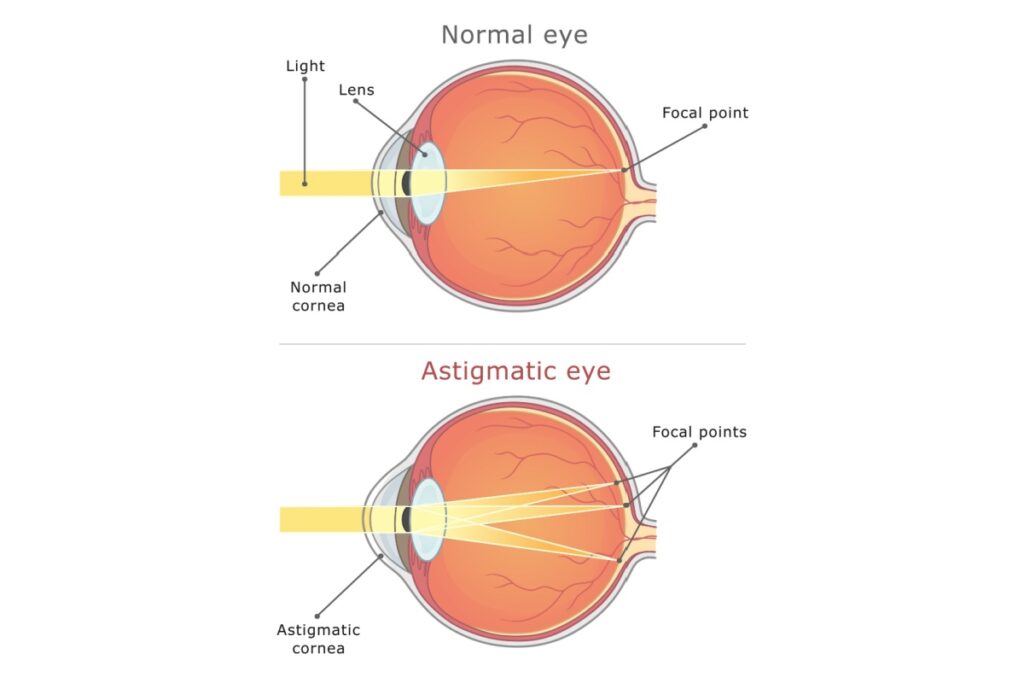
Astigmatism is a very common refractive condition. It means the clear front surface of your eye (the cornea) and/or the lens inside the eye is shaped more like a football than a perfectly round, spherical basketball. This irregular shape bends light rays unevenly as they enter your eye, which can make your vision blurry or distorted at all distances.
Signs You May Have Astigmatism
You may not even realize you have astigmatism. Some common signs include:
- Blurry or wavy vision
- Eye strain, especially after reading
- Headaches
- Difficulty seeing clearly at night
- Squinting to try to focus
Specialized Contact Lenses for Astigmatism
A standard soft contact lens can move and rotate freely on your eye with each blink. This works fine for simple nearsightedness or farsightedness, but it can’t correct astigmatism. You need a lens designed to stay in one specific position to keep your vision consistently clear.
Toric Contact Lenses
Toric lenses are the most common solution for astigmatism. These soft lenses have different powers in different parts of the lens to correct the uneven curve of your eye. They are also made with a special design—often a bit thicker or weighted at the bottom—to keep them from rotating out of place.
Rigid Gas-Permeable & Scleral Lenses
These are firmer lenses that maintain their shape on your eye instead of draping over it. Rigid Gas-Permeable (RGP) lenses are smaller and can offer exceptionally sharp vision. Scleral lenses are larger, vaulting over the cornea entirely, which makes them a comfortable option for complex prescriptions or sensitive eyes.
Hybrid Contact Lenses
Hybrid lenses give you two benefits in one. They have a firm, RGP centre for clear optics surrounded by a soft outer ring for comfort. This design provides a great balance of sharp vision and easy wear throughout the day. These are just some examples of the specialty contact lenses available today.
What Happens If You Wear the Wrong Contacts?
Trying to wear regular contacts when you need astigmatism correction can lead to disappointing results. Because a standard lens spins with every blink, your vision may shift in and out of focus all day. This constant change can cause more than just blurriness, it can also trigger headaches and persistent eye strain.
Contacts vs. Glasses: Your Personal Choice
Choosing between contacts and glasses often comes down to your daily activities and what makes you feel comfortable. Many people with astigmatism enjoy having both options available to switch between as needed.
Reasons to Choose Contact Lenses
- An unobstructed, wide field of view
- A more natural vision experience without frames
- Freedom to wear non-prescription sunglasses or safety goggles
- No weather issues like rain spots or fogging up
- The only option for sports/hobbies/vocations that can’t be performed with glasses on
When Glasses May Be a Better Fit
- No daily insertion and removal routine
- A break for your eyes on days when contacts feel uncomfortable
- A way to express your personal style with designer eyewear
- Easier to manage during allergy season or if you’re undergoing dry eye therapy
- No ongoing lens replacement costs
- Existence of significant ocular surface or eyelid abnormalities or disease
Your Guide to a Successful Contact Lens Fitting
The key to wearing contacts comfortably with astigmatism is a precise fit from a professional. This isn’t something you can guess online. A detailed evaluation makes sure your lenses match your eye’s unique shape and prescription for clear, healthy vision.
What to Expect at Your Appointment
A session for contact lens fittings is more involved than a standard eye exam. An eye doctor takes specific measurements of your cornea’s curve, size, and astigmatism. You will likely try on a diagnostic pair of lenses in the office so the team can check the fit, movement, and vision before you commit to a full supply.
Patience & Practice Make Perfect
Adjusting to your new lenses can take a little time, especially if you are new to contacts. It is important to follow the recommended schedule for wearing and replacing them. A follow-up visit with an optometrist is common to check that your eyes are healthy and you are seeing well with your new lenses.You have more options for vision correction than you may think. If you’ve been curious about contacts but thought astigmatism stood in the way, it may be time to explore the possibilities. To find out which lenses are right for you, book a comprehensive eye exam and contact lens fitting with the team at View Eye Care.